


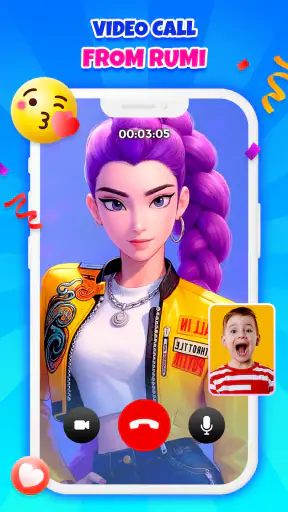
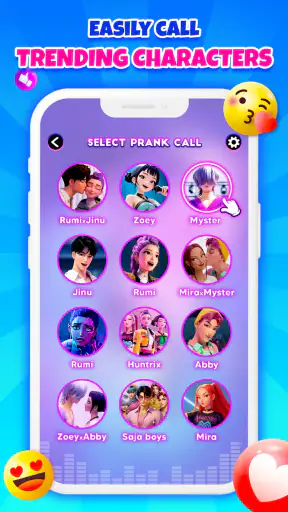
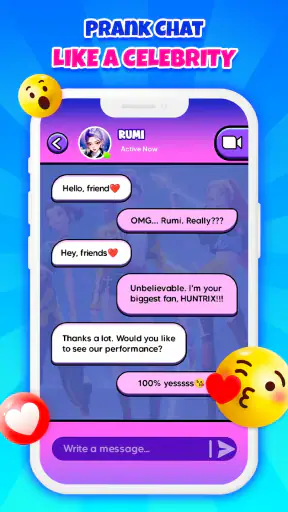

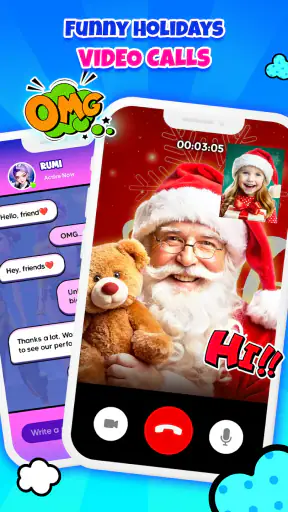
I tried Trending Prank App as the sort of entertainment app that can turn a quiet moment into a quick joke. Its idea is straightforward: it presents prank calls and video chats built around characters people may already recognize from current online trends. That makes it less like a traditional game and more like a collection of ready-made social scenes. I found the appeal strongest when somebody else was nearby to react with me, rather than when I opened it alone looking for a long session.
The app comes from Joy Buzz Games and sits in the entertainment category. It is free to install, carries an Everyone 10+ age rating, and has reached over five million installs. Those details give a useful picture of its audience: it is easy to try, broadly aimed, and designed for short bursts of amusement rather than a serious commitment. Still, “free” should not be confused with “suitable for every situation.” The real question is whether the people sharing a phone or tablet understand what the prank is meant to do and where the joke stops.
How it works when a household shares the same device
My first useful test was a familiar household situation: one person finds the app, another person is sitting nearby, and suddenly the device becomes a source of entertainment for everyone in the room. That shared setting suits this app much better than treating it as a private media library. The fun comes from choosing a scene, preparing the timing, and watching the reaction. The person holding the phone is only part of the experience; the listener or viewer is usually the real audience.
This also changes how I judge the app. A prank that feels harmless among friends can feel uncomfortable to a younger sibling, a parent who dislikes surprise calls, or somebody who does not recognize the character being used. I would introduce it as a joke-making tool, not as an app that should be handed over without explanation. That small bit of context prevents the most common household problem: someone opens it expecting ordinary videos and suddenly finds themselves involved in a staged conversation.
The character-based approach gives the app a clear identity. Instead of asking users to invent an entire prank from scratch, it supplies the central idea and lets the moment carry the humor. That is convenient when I want something quick. It is less satisfying if I am looking for deep customization, a long story, or a game with goals and progression. Compared with ordinary short-video apps, the experience is more focused and participatory. Compared with messaging a friend directly, it offers a more theatrical setup but less personal spontaneity.
I also noticed that the best results depend on choosing the right audience before opening anything. With adults or older children who understand staged entertainment, the app can be a light group activity. With a child who takes a realistic voice or video scene literally, I would stay involved. The age label of Everyone 10+ is a useful reminder that the app is not aimed at very young children, even though a shared family device may make access easy.
What to decide before handing over the phone
There is no need to turn a short prank into a complicated household policy, but I would establish a few boundaries first. The most important one is consent from the person being included in the joke. I would avoid using the app to frighten someone who has already said they dislike prank calls, and I would never use a realistic-looking scene to pressure somebody into revealing personal information or making a decision.
A second boundary concerns recording and sharing. The app’s entertainment value does not automatically give anyone permission to capture another person’s reaction and send it elsewhere. If the household wants a memory of the moment, I would ask before recording and ask again before sharing. This is especially important when children are present, because a funny reaction inside the home can become embarrassing once it leaves the room.
The third boundary is practical: keep the device owner in control. On a shared phone or tablet, I would not let a child change settings, install related content, or pass the device around without the owner knowing. The app itself may be simple to open, but shared-device habits are rarely simple. A parent, guardian, or account holder should remain the person who decides when it is used and who gets to use it.
These limits are not a criticism of the concept. They are what make the concept work responsibly. A prank app is more enjoyable when everyone understands that the scene is pretend. If the joke depends on confusion, fear, or embarrassment, I would choose a different activity. In my experience, the strongest use of this app is playful coordination, not trying to catch somebody unprepared at any cost.
Coordinating a prank without losing the fun
The most useful technique I found was to treat each prank like a tiny performance. One person operates the device, one person knows what is about to happen, and the target is chosen carefully. That division makes the timing cleaner and avoids the awkward moment when several people press buttons at once. It also gives the operator a chance to stop if the other person looks uncomfortable.
For a shared-device session, I would begin by previewing the general idea aloud rather than launching it secretly. That sounds less dramatic, but it helps distinguish a playful surprise from an unwanted scare. After choosing a character or scene, I would keep the first attempt short. A brief test tells me whether the sound, tone, and realism are appropriate for the room without committing everyone to an extended interaction.
Another practical tip is to avoid using the app during moments when someone needs the phone for something important. A household device may also be used for school, work, navigation, or an urgent call. Because the app is free and easy to open, it can be tempting to treat it as harmless filler, but interruptions still have consequences. I prefer using it during a planned break, when the device is not needed for another task.
Coordination matters even more when several people want a turn. I would let each participant choose whether to operate the app or simply watch. Not everyone enjoys being the center of a prank, and forcing a reluctant person into the target role undermines the friendly atmosphere. The app works best when the group treats participation as optional rather than assuming that every reaction is entertainment.
There is also a trade-off between realism and comfort. A highly convincing character call may create a stronger reaction, but it also requires more care. If the person being surprised is young, tired, anxious, or unfamiliar with the character, I would select the least intense option available in the moment. If the scene feels too believable, I would reveal the joke quickly. The goal is a shared laugh after the reveal, not a lingering feeling that somebody was manipulated.
Age, trust, and the meaning of a realistic joke
The Everyone 10+ rating is important here because the app’s central attraction is realism. A child around that age may understand that a character-based call is staged, while still reacting strongly to a convincing voice or video. I would use it alongside an adult for the first session, especially on a family device. That is not because the app should be treated as dangerous by default, but because context matters more than the button that starts the scene.
Trust is the real household issue. If children see adults using the app to trick one another kindly and reveal the joke quickly, they learn a healthier pattern than if they are encouraged to keep somebody confused. I would explain that the app creates pretend conversations and that no character should be used to request passwords, money, private photographs, or personal details. That lesson is valuable even when the immediate activity is only a laugh.
I would also be selective about letting a child use it independently. The age rating does not mean every child will respond to every prank in the same way. A mature ten-year-old and a sensitive older child may need different levels of supervision. Since this is an entertainment app rather than a learning tool, there is no reason to rush independent access. Shared use gives adults a chance to see which scenes are comfortable and which should be skipped.
For teenagers, the main concern shifts toward social pressure. A group may encourage one person to participate because the reaction seems funny, or may want to share that reaction with others. I would make the rule simple: the person being pranked can stop the activity, and their reaction is not automatically content for a group chat. That keeps the app in the realm of play instead of turning it into a tool for humiliation.
Adults should be cautious too. A realistic call can be mistaken for a genuine contact if the recipient is distracted or unfamiliar with the trend behind the character. I would not use it during a stressful event, while somebody is driving, or in any situation where confusion could cause a practical problem. The app is designed for entertainment, so it should stay inside an entertainment setting.
Where it fits among familiar entertainment apps
Compared with short-video platforms, Trending Prank App is narrower but more interactive. A short-video feed gives me endless passive viewing, while this app gives me a prompt for a social moment. If I want background entertainment by myself, a video service is probably the better choice. If I want to create a quick reaction with someone sitting next to me, the prank format has a clearer purpose and less scrolling.
Compared with conventional games, it has less depth. I would not open it expecting levels, strategy, collecting, or a reason to return for a long session. Its strength is immediacy: choose a scenario, involve another person, and move on. That makes it a good fit for a family gathering, a short break, or a casual laugh, but a poor substitute for a game night when people want sustained challenge.
Compared with making a prank call without an app, the character framing gives the joke a starting point and reduces the need to invent dialogue. That convenience is useful, particularly for someone who is not naturally theatrical. The downside is that the experience can feel more limited because the humor depends on the scenes and characters available in the current version. I would choose a normal conversation, a party game, or a creative improvisation activity when the group wants more control over the story.
The current version is 2.5.2, and the app runs on devices using Android 7.1 or later. For someone with an older phone, that minimum requirement is worth checking before planning a shared session. On a compatible device, the practical advantage is that the app can be tried without paying an entry fee. I would still judge it by how often the household actually uses it, rather than by the low barrier to installation.
Its average rating is 3.6 from around three thousand ratings, with sixteen written reviews shown in its store presence. I read that overall signal as mixed but understandable for a novelty entertainment app. Some people will enjoy the quick character-based idea, while others may expect more variety, stronger control, or a more substantial game. The rating does not change my view that the app can work well in the right social setting, but it does make me less likely to recommend it as a must-have for everyone.
Small habits that make shared use smoother
I would keep the first session supervised and brief, then decide whether the app deserves a regular place on the shared device. That trial is more useful than assuming the age label or install count tells me how it will fit a particular household. Watch how people react, notice whether anyone feels pressured, and pay attention to whether the humor remains funny after the reveal.
I would also agree on a simple handoff routine. The device owner opens the app, the next user explains what they want to try, and the owner remains nearby while the scene runs. This avoids accidental use by a younger child and prevents one person from taking over the phone for an unplanned series of pranks. It is a small workflow, but it works especially well when several siblings or friends share one screen.
Another overlooked point is emotional timing. A prank that works at a relaxed weekend gathering may be a bad choice just before school, after an argument, or when somebody is already overwhelmed. Because the app is built around surprise, the operator should consider the target’s mood rather than focusing only on the novelty of the character. That judgment is more important than finding the most realistic scene.
Finally, I would end the session while the group is still enjoying it. Repeating the same style of joke can make the app feel predictable and can turn a willing participant into an unwilling target. A few well-timed uses are more memorable than constant interruptions. This is one of those apps where restraint improves the experience.
My household verdict
After using it, I see Trending Prank App as a lightweight social entertainment tool, not a full game and not a replacement for ordinary video platforms. Joy Buzz Games has built something that can supply an immediate premise for a joke, particularly when a few people are sharing one device. The free price makes experimentation easy, and the character-led format gives casual users more structure than inventing a prank from nothing.
I would recommend it to households with older children, teenagers, or adults who enjoy playful staged reactions and are willing to set clear limits around consent, recording, and personal information. I would introduce it together rather than leaving a young user to explore it alone. The app is most successful when the person being surprised is treated as a participant whose comfort matters, not as raw material for a reaction.
I would skip it if I wanted a deep game, a quiet solo activity, educational content, or a dependable way to communicate with real people. I would also avoid it for anyone who finds realistic calls stressful or who may misunderstand pretend characters as genuine contacts. In those cases, a normal puzzle, a family-friendly video, or a cooperative game would be a better fit.
For my own shared-device use, the verdict is cautiously positive. It earns a place as an occasional conversation starter, provided an adult or responsible owner keeps the boundaries clear. The best reason to use it is not the prank itself, but the short, coordinated moment of laughter that follows when everyone knows it is only a joke.
That makes the app easy to recommend in a specific situation rather than universally. If your household enjoys character-based humor and can handle realistic scenes thoughtfully, it is worth trying. If you expect depth, privacy controls, or a long-lasting entertainment system, I would look elsewhere. Its value comes from timing, trust, and the people around the screen.


